All Resources
Find resources from all of our focus areas in one place
TACL
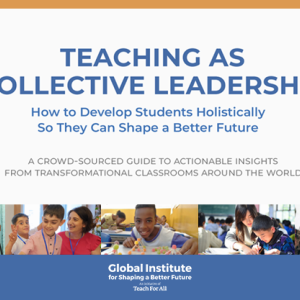
Teaching As Collective Leadership (TACL) Guide
Over the past six years, more than 4,500 students, teachers, teacher coaches, community members, program designers, CEOs, researchers, and policymakers from across and beyond our network of 60+ partner organizations have contributed to these crowd-so...
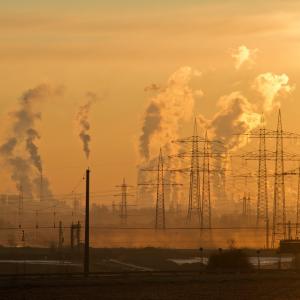
Climate Education
UN CC:e-Learn
This website offers self-paced courses on circular economy, climate change, and green economy. Each course consists of modules that will guide you through the lesson with the aid of recorded videos, readings, discussion points, and quizzes. Notes: A ...

Community Impact Lab
The Missing Piece: Developing Collective Leadership to Transform Education
This report from Teach For All explores what we’ve learned about what it takes to develop collective leadership to create the enabling conditions for change. Over the past five years, Teach For All has been exploring the questions of what it takes to...
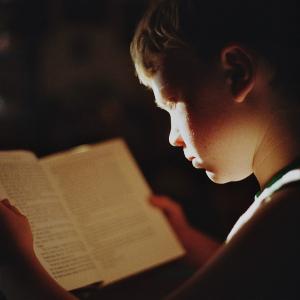
Girls' Education
Leave No Child Behind: Global Report on Boys’ Disengagement from Education
A global report on boys’ disengagement from education with qualitative and quantitative evidence from over 140 countries. It identifies factors influencing boys’ learning outcomes, analyzes responses by governments, and includes recommendations.
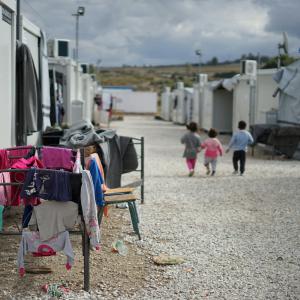
Education in Emergencies
Refugee Education: UNHCR Teaching Materials
This web page contains a variety of teaching materials for students that prioritize interactive learning with peers and teachers and emphasize social-emotional skills and diversity. The materials are divided into sections by student age groups: 6-9, ...

Climate Education
Understanding Food and Climate Change: An Interactive Guide
This guide provides multicultural and interdisciplinary perspectives. It makes use of text, video, photography, and interactive experiences around climate science and its interaction with the food system. The resource can be used for a series of less...